Heat accelerates lithium-ion ageing in an e-bike battery by speeding up the chemical reactions inside each cell, which permanently reduces usable capacity over time. The damage is greatest when heat arrives from several sources at once: sunlight on the frame, a parked car in summer, and sustained high-current riding on long climbs.
How does temperature affect e-bike battery life?
How heat drives chemical ageing
Lithium-ion cells age through side reactions that consume active lithium and electrolyte. Heat speeds these reactions, most notably the growth of the solid electrolyte interphase on the negative electrode. Each unit of growth locks away lithium that would otherwise store charge, so the battery holds less energy and its internal resistance rises. This loss is cumulative and does not reverse when the battery cools, so repeated heat exposure shortens the battery’s useful life even when the bike is ridden lightly.
Sun exposure on the frame
Dark casings and frame-mounted batteries absorb solar radiation, so the pack can run noticeably hotter than the surrounding air. Parking in shade or on the side of a building away from direct sun reduces this load, and the effect is strongest on bikes left outdoors for hours in summer.
Heat from riding and high-current discharge
Current flowing out of the cells produces heat through internal resistance, so the battery warms faster when the motor draws high current. Long climbs at high assist, or riding with heavy loads, sustain that current for longer than flat cruising does.
What charge level is best for e-bike battery health?
The best charge level depends on how often you ride. According to Tern Bicycles (relaying Bosch eBike guidance), the state of charge (SoC) should stay within a fixed band between uses, and that band differs for regular riders and occasional riders.
| Rider profile | Recommended state of charge |
|---|---|
| Regular rider | 80–90% |
| Occasional rider | 40–70% |
The regular-rider band keeps the battery near full, so it is ready for the next trip without a full recharge. The occasional-rider band is lower and suits batteries that sit unused for longer stretches. Use the battery’s charge indicator, such as the LED bars on a Bosch battery, to check where you are before you put the bike away.
Consequences of fully draining the battery
Guidance from Tern Bicycles (relaying Bosch eBike guidance) is to avoid draining the battery completely. Practically, this means ending a ride while some charge remains rather than riding until the motor stops assisting. A flat battery may not recover, and if it has been in the cold it must be above freezing before you charge it.
Keeping the charge within the correct band protects the battery from repeated deep discharges, and it is the simplest habit to build into your routine. Use the table to set the target for your own riding pattern, and check the level before each ride so you do not drift into the empty zone.
How should you charge an e-bike battery in Canada?
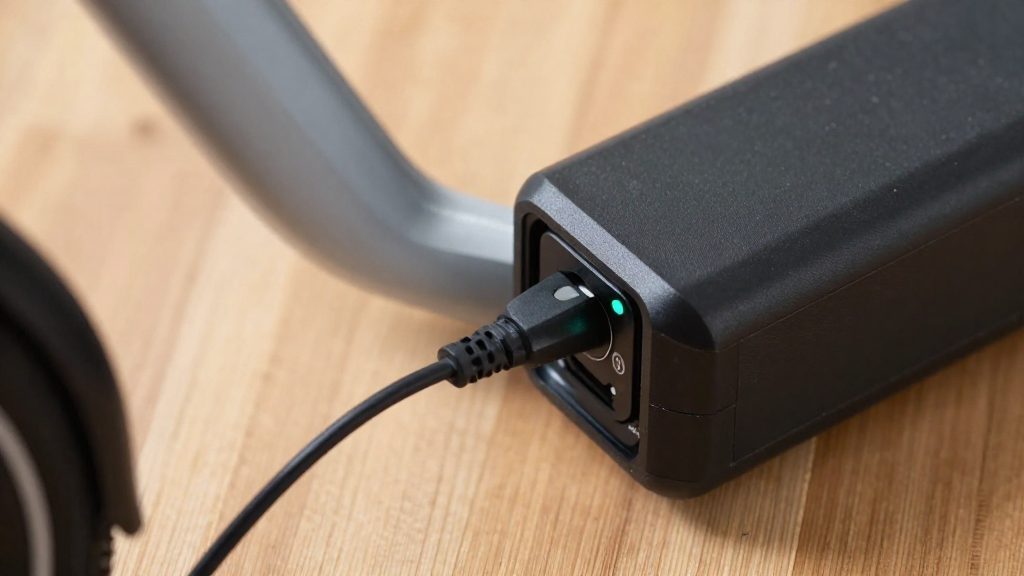
Charging is the stage where timing and temperature matter most. Bosch eBike guidance, relayed by Tern Bicycles, names room temperature as the reference condition for charging, and the rules below follow from that reference.
| Situation | Charging guidance | Source |
|---|---|---|
| Right after a ride | Let the battery rest about 30 minutes before charging | Tern Bicycles (relaying Bosch eBike guidance) |
| Normal conditions | Charge at room temperature, about 20°C | Tern Bicycles (relaying Bosch eBike guidance) |
| Winter, especially below 0°C | Bring the battery indoors to charge | Tern Bicycles (relaying Bosch eBike guidance); Epic Cycles (2025-09-11) |
| Battery came in from freezing air | Confirm it is above freezing before connecting the charger, because the electrolyte can freeze | Pedego Electric Bikes Canada |
The order of these steps matters. The rest period comes first, so the battery is not connected straight after a ride. A practical sequence is to let the battery rest, move it indoors if the bike has been in the cold, and connect the charger once the pack is in a heated space and above freezing. Charging a battery straight from sub-zero air skips the warm-up that the table’s last row depends on.
For Canadian winter riders, this means planning the charge around the ride rather than the commute. If you ride to work in cold weather, bring the battery into the building with you instead of leaving it on the bike in an unheated area overnight, and schedule the charge for the evening, after the rest period has passed.
Charging indoors at room temperature keeps the battery within the range the guidance describes. If you can only charge in a garage or shed, check the temperature there first and move the battery into a warmer room when it is near freezing.
How do you store an e-bike battery over a Canadian winter?
Winter storage depends on three variables: the state of charge, the storage temperature, and how often you check the pack. Bosch and Pedego give different charge bands, but their guidance overlaps enough to set one practical target.
| Parameter | Bosch eBike (via Tern Bicycles) | Pedego Electric Bikes Canada |
|---|---|---|
| Storage charge | 30–60% (2 to 3 LED bars) | 40–80% |
| Storage temperature | About 20°C ideal; never below 0°C or above 40°C | 10–20°C |
| Check interval | Periodically | Every couple of months |
Storage band: Storage band: The two charge ranges overlap between 40% and 60%. Holding the pack in that window satisfies both sets of guidance. Bosch also advises against storing the battery fully charged or fully empty. On a Bosch pack, two to three lit LED bars confirm you are inside the band.
Storage setpoint: Pedego’s 10–20°C range has 20°C as its upper edge, which matches Bosch’s ideal figure. Choose a space that stays within 10–20°C, ideally close to 20°C. This keeps the battery inside Pedego’s range, matches Bosch’s ideal figure, and stays well clear of Bosch’s 0°C and 40°C limits.
Periodic checks: Read the charge indicator at each check. If the reading has drifted outside 40–60%, top up or partly discharge the pack to return it to that band, as Bosch recommends for keeping the battery within range.
Recovering a flat battery in spring
Pedego notes that a flat battery may not recover in spring. Before attempting any charge, bring the pack to a temperature above freezing, because the electrolyte can freeze. Then check the charge level:
- If the battery accepts charge and holds it within the storage band, return it to service and keep the regular check schedule.
- If it will not charge, or drains almost at once, stop repeated charging attempts. Have a qualified service or the manufacturer assess the pack.
Can you ride an e-bike in cold weather without harming the battery?
They say cold can cut range by about 20–50%, and they do not say whether the loss is permanent. Canadian retailer Epic Cycles (2025-09-11) gives an estimated range reduction of about 20–50% in cold conditions. Treat this as an estimate, not a fixed value, and plan rides against the low end of your normal range. The more important question for owners is whether the lost range comes back once the battery warms up, or whether the battery has been harmed.
Temporary loss versus permanent cell damage
The guidance behind this section describes cold as reducing range. It does not state whether that reduction is permanent, so the reliable way to tell the two apart is a simple test. Warm the battery to room temperature, then compare its range with your baseline. If the range returns, the loss is likely temporary and temperature-related, though this simple check cannot rule out wider ageing. If it stays low after warming, have the battery assessed.
The sourced guidance on cold riding concerns avoiding a complete drain and not charging a battery that is below freezing.
Practical steps to limit cold-related range loss
- Start cold rides from the top of your usual charge band. The reduction applies to whatever capacity you begin with, so a higher starting charge gives you more usable range.
- Log your range at the start of each cold-weather ride. Compare readings after the battery has returned to room temperature. This separates a temporary temperature effect from a loss that persists.
Riding and upkeep habits that protect the battery
Three habits reduce the electrical and thermal stress on an e-bike battery pack during regular use: choosing an assist level that matches the terrain, keeping the contacts and casing clean and undamaged, and keeping the battery and display software current. None of these needs special tools. They work by limiting how hard the pack is pushed, keeping the connections reliable, and letting the battery management system control charge and temperature correctly.
Choosing assist level to limit motor current draw
The motor draws current from the battery in proportion to the assistance it delivers, so a higher assist level drains the pack faster and generates more heat in the motor and battery. Use the lowest level that still gives you the pace you need. Stay on the eco or low setting on flat ground and tailwind stretches, and reserve the highest levels for steep climbs, loaded riding, or headwinds. Shifting gears earlier on hills reduces how much the motor has to work, which lowers motor current draw without slowing you much.
Cleaning and inspecting the battery contacts and casing
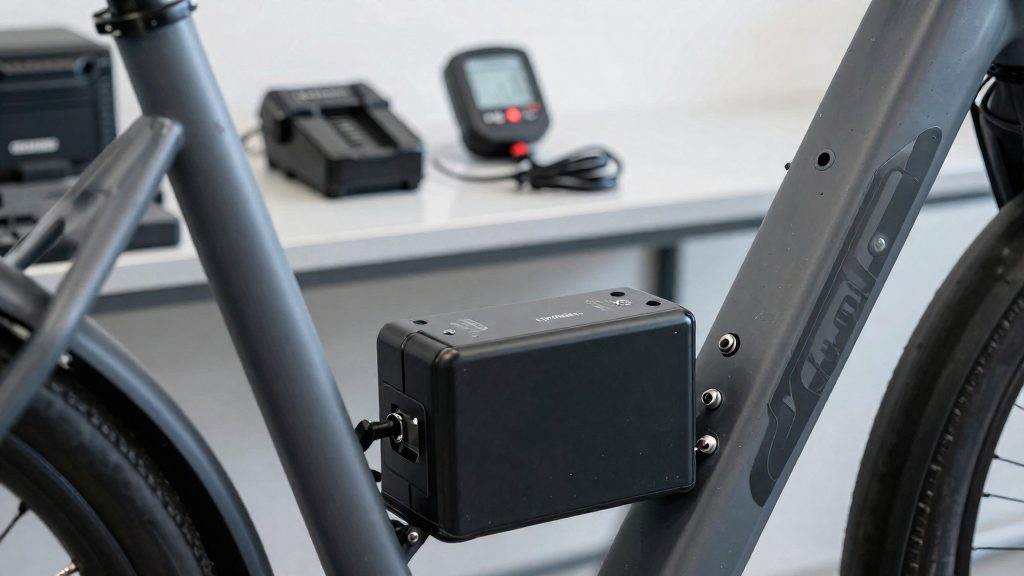
The battery contacts are where electrical resistance builds up if they become dirty or corroded. Once a month, or after riding in wet or salty conditions, check the contacts on the battery and the frame mount for grit, moisture, and green or white corrosion. Wipe them with a dry, lint-free cloth. Do not use solvents, abrasives, or a pressure washer aimed at the connector or the charge port. Inspect the casing for cracks, split seals, and a loose or missing port cover, because water entering the housing is a common cause of internal damage. If the seal is damaged, contact the manufacturer or an authorised service centre before using the battery again.
Keeping battery and display firmware updated
The battery management system and the display run firmware that controls charge cut-off, temperature limits, and assist behaviour. Manufacturers release updates to correct these functions, and they are usually delivered through the brand’s smartphone app or by a dealer. Check the firmware version in the app or the display’s settings menu every few months, and install updates when prompted. Keep the battery and the display on the same supported update path, since mismatched versions can prevent the system from reporting accurate charge and fault information.
| Habit | Stress it reduces | Practical step |
|---|---|---|
| Lower assist level on flats and tailwinds | Motor current draw and heat | Use eco or low on level ground; shift earlier on climbs |
| Clean and inspect contacts and casing | Electrical resistance and water ingress | Wipe contacts dry; check the seal and port cover |
| Keep firmware current | Mis-set charge and temperature limits | Check the version in the app or display menu |
When should you check or replace the battery?
An e-bike battery is near end of life when it no longer gives the range it once did under the same conditions, shuts off under load while the display still shows charge, or fails to reach a normal full charge. Before you decide, rule out temporary causes. Cold weather can cut e-bike range by an estimated 20–50%, according to Epic Cycles (2025-09-11), so repeat the test at room temperature, starting from the same charge level as your baseline. Only a shortfall that persists at room temperature points to ageing.
Range loss and capacity indicators
Run the same route, assist level and load each time, and record the distance you reach. An ageing battery shows a steady decline across several tests. A single poor ride does not indicate a fault. Other warning signs include a charge level that falls quickly after leaving the charger and a sudden drop in assistance on hills that the battery previously handled.
Warranty eligibility and manufacturer diagnostics
Read the warranty terms supplied with the bike or battery and keep the proof of purchase. Most claims require the manufacturer or an authorised dealer to run a diagnostic on the pack. Ask for the test results in writing, along with the battery serial number, so you have a record if the claim is refused.
Replacement cost versus remaining usable capacity
Compare the replacement quote from an authorised dealer with the range you still get. If the battery covers your regular commute on one charge, replacement can wait. If it cannot complete a route you ride every week, the cost is justified by the lost use. Do not buy a replacement before a diagnostic confirms a capacity fault.
| Symptom | Likely meaning | Next step |
|---|---|---|
| Range falls at room temperature on the same route | Capacity loss from ageing | Warranty diagnostic, then replacement if the battery is out of warranty |
| Range is low only below freezing and recovers indoors | Cold effect, not necessarily ageing | Retest at room temperature |
| Battery stays flat after winter and will not charge | Possible deep discharge damage | Dealer diagnostic before charging again |
Frequently asked questions
How full should I leave my e-bike battery over the winter?
According to Tern Bicycles, relaying Bosch eBike guidance, a Bosch battery should sit at about 30–60% (2 to 3 LED bars) during storage, never full or empty. Pedego Electric Bikes Canada suggests a winter storage charge of about 40–80%, so the figure depends partly on your brand.
Can I charge my e-bike battery straight after a cold ride?
Let the battery warm to room temperature, about 20°C, before charging. Pedego Electric Bikes Canada warns that the electrolyte can freeze, so confirm the battery is above freezing before you plug it in. A battery left flat through winter may not recover in spring.
How much range do I lose in cold weather?
Epic Cycles, a Canadian retailer, estimates that cold weather can cut e-bike range by roughly 20–50%, so treat that as a rough guide rather than a fixed figure. The loss comes mainly from reduced cell output at low temperatures, which means a partly drained battery in a cold garage will deliver even less assist than a warm one.