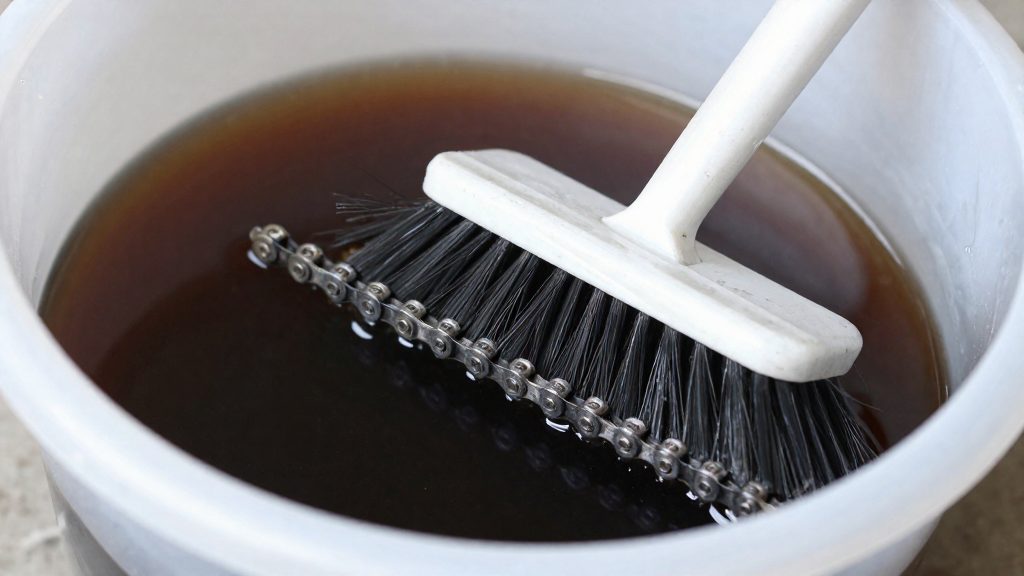
A bike chain degreaser is a cleaning product that removes the oil, grease and dirt that build up on a chain.
What does a bike chain degreaser actually do?
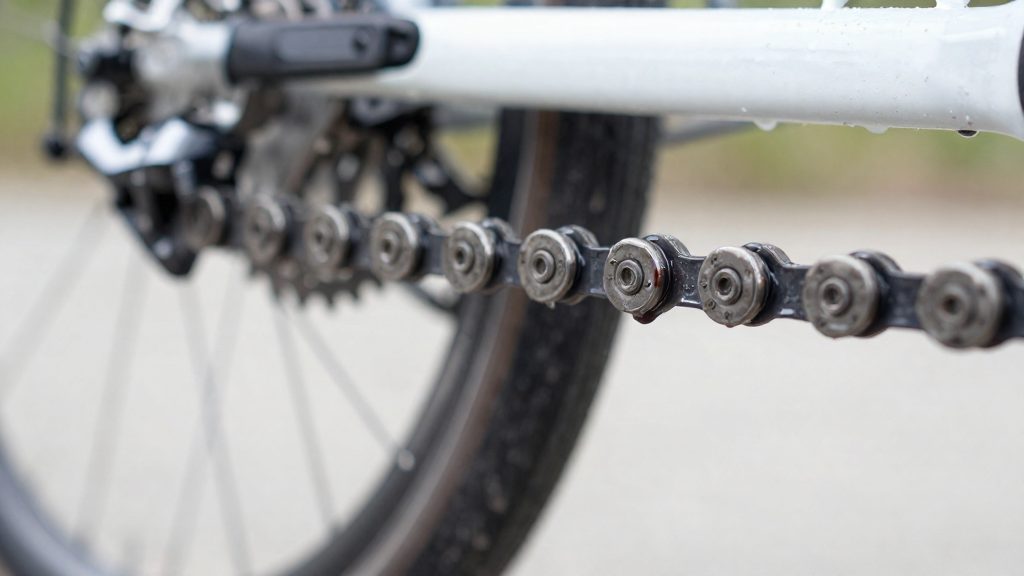
According to BikeRadar (2024), most chain degreasers are solvents. They dissolve the oil, grease and dirt that bond to the rollers, side plates and pins, which is why a solvent-based product can clear a heavily soiled chain. Once the deposit is dissolved, it can be wiped or rinsed away, leaving the metal free of residue.
Why old lubricant traps abrasive wear: Chain oil left on the chain mixes with fine grit from the road and weather. The result is a paste that acts as an abrasive between the moving parts. Fresh lubricant applied over this paste sits on top of the contaminated layer instead of reaching the contact surfaces, so the grit keeps grinding against the metal.
The format of the product also changes how the deposit is removed. According to BikeRadar (2024), aerosols add blasting force.
Degreasing and lubricating are separate jobs:
| Step | Main purpose | Result on the chain |
|---|---|---|
| Degreasing | Dissolves old oil, grease and grime | Clean metal with no contaminated film |
| Lubricating | Places a new film on pins and rollers | Reduced friction on clean surfaces |
A degreaser does not lubricate the chain. Its role is to clear the surface, so the lubricant can do its work on the moving parts.
Solvent, citrus or bio: which degreaser type fits?
Chain degreasers fall into three chemistry groups, and the choice mainly depends on how much deposit the chain carries. Citrus and biodegradable options act more gently on the same deposits, but they may need more product or more effort to achieve a similar result.
| Chemistry | Action on chain deposits | Effort per chain |
|---|---|---|
| Solvent | Dissolves chain oil, grease and dirt | Lower, because the product works on the deposits directly |
| Citrus or biodegradable | Gentler action on the same deposits | Higher, as more product or scrubbing may be needed |
Heavily greased chains are the clearest case for a solvent. Thick, aged grease that has collected grit is what solvents are designed to dissolve, so a single application usually goes further than with a gentler formula. A citrus or biodegradable product can still work, but expect to repeat the application and spend more time brushing.
Lightly soiled chains, such as one that has only picked up road dust after a ride with fresh oil, are a better match for citrus or biodegradable products. The gentler action removes the surface film without stripping more lubricant than necessary.
What is the best degreaser for a bike chain?
No single degreaser suits every chain. The right choice depends on how heavily the chain is soiled and how much mechanical effort you will put in. The delivery format then determines how the product reaches the chain and how much work remains after it is applied.
| Format | Chemistry | Best-fit use case | Limitation |
|---|---|---|---|
| Aerosol | Solvent | Heavily caked chains, where the added blasting force helps dislodge packed grime | Force alone does not replace brushing on stubborn deposits |
| Foaming | Solvent | Sticky, thick grime, because the foam clings to the chain | Needs time to act before rinsing |
| Unpressurised liquid | Solvent | Users who will scrub the chain or use a chain-cleaning tool | Depends on brushing or a cleaning tool to work |
| Citrus or biodegradable | Plant-based or biodegradable | Routine cleaning of a lightly soiled chain, or where a gentler product is preferred | May need more product or effort |
Aerosols and foams suit a neglected drivetrain. Their strength comes from dissolving old lubricant. Unpressurised solvent liquids suit you if you already own a chain-cleaning tool, since the mechanical action does most of the work. Citrus and biodegradable products fit regular maintenance, and they are the better option where you prefer to avoid harsh solvents.
Container size and price vary by brand and retailer. The specific brands and their figures are not verified in this article.
Aerosol, foam or liquid: how do they compare?
The delivery format determines how the solvent reaches the chain and how much physical work the cleaning requires. Aerosols, foams and unpressurised liquids differ mainly in delivery force, how long the product stays on the chain, and how much cleaning effort remains after application.
| Format | Delivery pressure | Behaviour on the chain | Mess | Cleaning effort |
|---|---|---|---|---|
| Aerosol | High, adds blasting force | Drives product into the chain’s rollers and plates | Overspray can reach the frame, wheels and drivetrain | Low to moderate, the force loosens debris |
| Foam | Low, adds no blasting force | Clings to the chain and stays in contact longer | Moderate, residue runs down the chain | Low to moderate, the foam carries away loosened grime |
| Unpressurised liquid | None | Pools or runs off without forced penetration | Low, but cleaning depends on the brush | High |
Aerosol formats deliver the most force, which helps dislodge packed grit between link plates. The trade-off is overspray. Mist travels beyond the chain, so masking the frame, the rear wheel and the brake surfaces before spraying is the practical safeguard.
Foam clings to the chain, which keeps the solvent in contact with the surfaces it needs to dissolve. It does not add force, so heavily caked deposits may still need agitation.
Liquid formats rely on the user. This gives the most control over where the product goes, but it takes the longest.
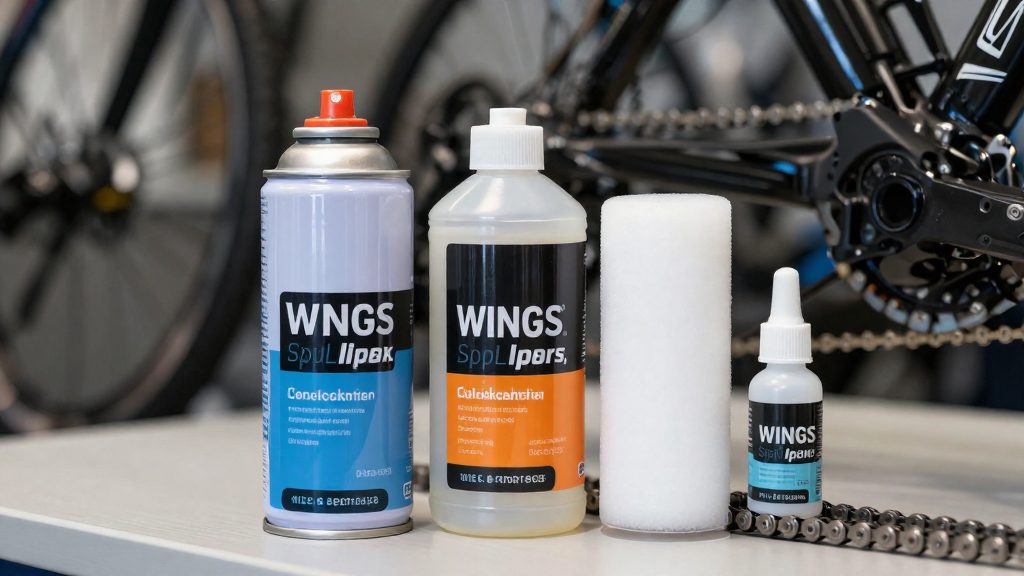
How do you degrease a chain step by step?
Degreasing a chain is a sequence of deciding whether to remove the chain, applying product and brushing, clearing the residue, and only then relubricating. Each stage depends on the previous one, because lubricant applied over trapped grit or leftover degreaser holds dirt against the rollers and dilutes the new oil.
Step 1: Decide between removing the chain and cleaning in place. Cleaning in place is quicker and suits light maintenance. Removing the chain with a chain tool gives full access to the inner and outer plates, and it lets you soak or dunk the chain in a container. Note the link you break so you can reinstall it correctly, and use a quick link if your chain has one.
Step 2: Apply the degreaser according to its type. Aerosols need a short spray directly on the chain. Foaming products should be applied so the foam covers the full run, then left to work. Unpressurised liquids need a brush or a chain-cleaning tool to reach the rollers. Work the chain through the product by turning the cranks backwards so every section passes through the solution.
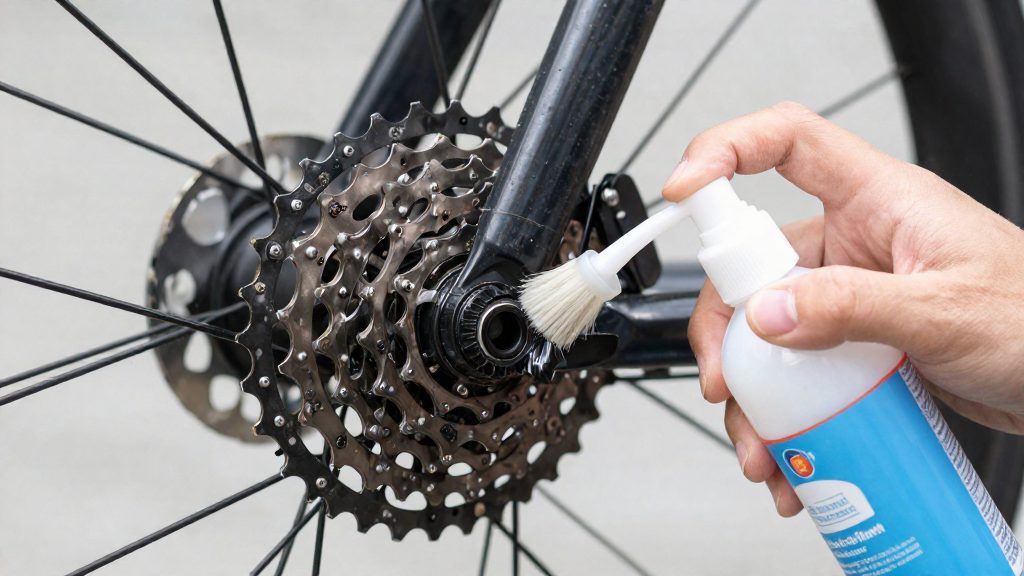
Step 3: Brush the rollers, side plates and sprocket teeth. Use a stiff brush to scrub the rollers and the gaps between the plates, which hold most of the grit. Follow with a small brush for the teeth of the chainrings and cassette. Keep brushing until the dark residue stops coming off on the bristles.
Step 4: Wipe, then rinse if the label allows. Wipe the chain with a clean rag to remove loosened grime and degreaser. If the product label permits water rinsing, run clean water over the chain afterwards and wipe again. Rinsing only after the brushing stage prevents you from pushing grime deeper into the rollers.
Step 5: Dry completely before relubricating. Leave the chain to air dry until no visible moisture or solvent smell remains. Lubricating a wet or still-solvent-laden chain dilutes the oil and reduces its ability to coat the rollers.
Step 6: Relubricate and wipe the excess. Apply lubricant to the inner side of the rollers while turning the cranks backwards, so the oil penetrates each joint. Then wipe the outer surfaces of the chain with a rag, since excess lubricant attracts dust and dirt.
Can degreaser harm disc brakes and seals?
Yes. Any greasy or rubber part the product touches can be affected. Chain degreaser is designed for the drivetrain, so the main protection is limiting where the spray and drips go. Disc brakes, hub seals and painted or plastic parts sit close to the chain and are the most common places for overspray.
The risks differ by component. Residue on a disc rotor leaves a film that reduces friction, while product that transfers to the brake pads changes how they grip. Rubber seals are a separate concern: some solvents soften or swell rubber compounds, and the lips of hub and bottom bracket seals are their main barrier against water and grit.
| Component | Effect of degreaser contact | Practical prevention |
|---|---|---|
| Disc rotor | Oily film reduces friction, which can cause squeal or weaker braking | Mask the rotor with tape or a plastic bag before spraying |
| Brake pads | Absorb solvent and can lose grip | Remove wheels or cover the caliper; never spray pads directly |
| Hub and bottom bracket seals | Rubber may soften or swell with prolonged exposure | Keep spray off the seal lips and avoid soaking the hub |
| Plastic and painted parts | Dulling, clouding or surface cracking on some products | Check the product label for plastic compatibility and spot-test a hidden area |
Unpressurised liquid types depend on brushing, and foams may need some agitation. Both increase the chance of wiping across other parts. Choose the method that keeps the product on the chain and drivetrain.
How do you dispose of degreaser safely?
Degreaser waste falls into three groups: spent solvent, oily rags, and empty aerosol cans. Each needs different handling, but all three should stay out of household bins and drains.
Spent solvent
Once a chain has been cleaned, pour the used liquid into a sealed container kept only for waste solvent. Do not combine it with other chemicals, paints or fuels, since mixed waste is harder for collection services to accept. Label the container with the contents (“Used bike chain degreaser”), the product name, and the date it was filled. Store it upright, with the lid tight, in a cool place away from heat sources and open flames.
Degreasing a chain in a tray or over a cardboard sheet makes collection easier. Catch the drips and add them to the waste container, then wipe the tray and treat the wipe as an oily rag.
Oily rags and flammable residue
Rags soaked in degreaser or chain oil can heat up as they dry, and a pile of them left in a bin is a fire risk. Lay used rags flat on a non-combustible surface outdoors, away from flames and sources of heat, and let them dry completely before disposal. Once dry, put them in a sealed metal container. Check with your local waste service for the approved method, since rules on oily rags differ by area. Do not keep soaked rags in a garage corner, a bag inside a closed car, or a drawer.
Empty aerosol cans
Aerosol cans are pressurised. Use up the remaining product on its intended task, following the label, then let the can sit upright until it is fully empty. Do not spray leftover product into the air to get rid of it. Never puncture, heat or incinerate a can, and do not crush it. Empty cans can usually go to metal recycling, but confirm this with your local service because some areas require them to go to a household hazardous waste point.
| Item | Handling | Disposal route |
|---|---|---|
| Spent solvent | Sealed, labelled, dedicated container | Local household hazardous waste point |
| Oily rags | Dried flat outdoors, then sealed in metal | Local waste service instructions |
| Empty aerosol cans | Emptied fully, never punctured or heated | Metal recycling or hazardous waste point |
Frequently asked questions
Can I skip the lubricant and just use the degreaser on my chain?
No. A degreaser clears the old oil, grease and grit, but it does not leave a lubricating film on the pins and rollers. Apply a fresh chain lubricant once the chain is clean and dry, or the moving parts will run with bare metal contact.
Which type of degreaser should a beginner choose?
For a chain with heavy, long-term buildup, a solvent-based degreaser dissolves the deposit most directly, so it needs less scrubbing. Citrus and biodegradable products are gentler on the hands and the environment, but they usually need more product and more brushing to reach the same result.
What happens if degreaser gets on my brakes?
Brake pads or rotors that have been contaminated with degreaser or oil need thorough cleaning, and wiping them is not enough. Pads that have soaked up the contaminant are generally replaced, so keep the product away from the braking surfaces while you work.