Wet lube and dry lube differ mainly in base and film. According to road.cc (2023), wet lube is typically oil-based and repels water while preventing rust, and dry lube is typically wax- or Teflon-based, leaves a drier coating, and attracts less dirt. Each type behaves differently when rain or mud reaches the chain, which determines which one suits a given ride.
Wet lube or dry lube: what is the difference?
Wet lube is thicker and stickier. According to Muc-Off (2024), this film resists washing off in rain or mud, but it is harder to clean and picks up dust in dry weather. Dry lube forms a drier coating that attracts less dirt, but it can wash off in rain or mud, so it needs more frequent application.
| Property | Wet lube (oil-based) | Dry lube (wax or Teflon-based) |
|---|---|---|
| Base | Oil | Wax or Teflon |
| Film | Thicker and stickier | Drier coating |
| Water in rain or mud | Repels water; resists washing off | Can wash off |
| Dirt attraction | Picks up dust in dry weather; harder to clean | Attracts less dirt |
The practical trade-off is between holding the lube on and keeping grit off it. A wet lube stays on the chain in a downpour, but its tacky film collects dust and is harder to remove, so cleaning becomes more work. A dry lube stays cleaner in dusty conditions, but its thinner film can be stripped away by water, leaving the chain exposed to rust.
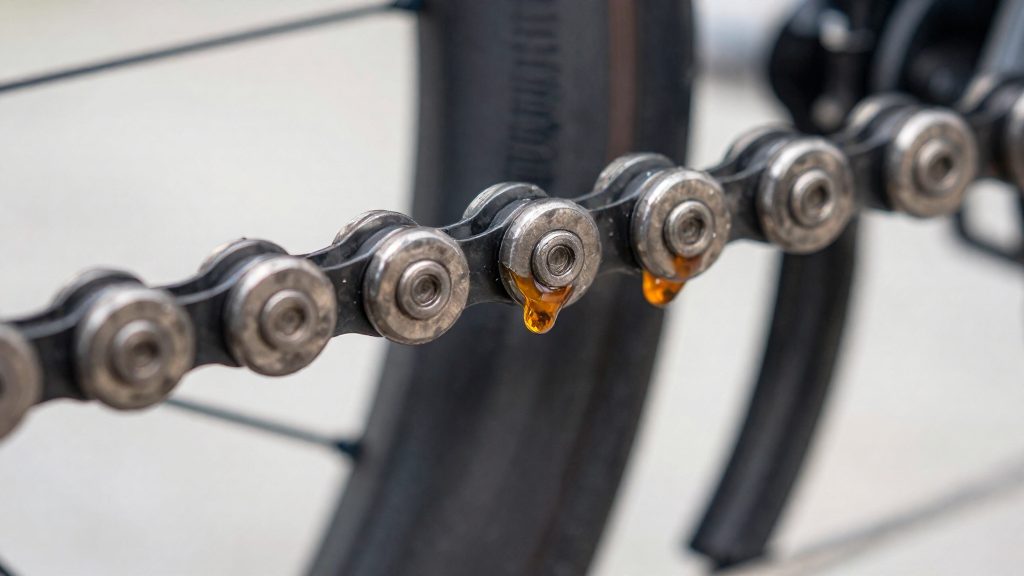
Which lube is best for riding in the rain?
For wet riding, choose a wet lube. road.cc (2023-12-27) names two wet lubes suited to these conditions, Green Oil and Fenwicks Wet Weather, and both belong to the wet-lube category.
| Product | Lube category | Source |
|---|---|---|
| Green Oil | Wet lube | road.cc (2023-12-27) |
| Fenwicks Wet Weather | Wet lube | road.cc (2023-12-27) |
Muc-Off (2024) gives a simple selection rule: use wet lube when it is wet outside and dry lube when it is dry. Matching the lube to the conditions you ride in most keeps both drawbacks to a minimum.
Selecting lube for mixed wet and dry rides
Rides that start dry and turn wet, or the reverse, need a decision based on the conditions you expect to ride in for most of the outing. Muc-Off (2024) suggests using wet lube when it is wet and dry lube when it is dry. If the weather changes mid-ride, a small bottle lets you top up the chain, and cleaning the chain before lubing is advised whenever possible.
Are wax lubes good in wet weather?
Some wax lubes perform poorly in cold or wet riding, and temperature is one constraint. According to road.cc (2023), some wax lubes lose performance in cold or wet weather. Some wax lubes therefore suit dry, mild rides better than rain.
Temperature limit
According to road.cc (2023), Morgan Blue Dry Wax is affected by cold and is not recommended below 0°C. Check the forecast before setting out, because a wax film that works on a mild morning may not be suitable for a ride that starts near freezing.
Durability in wet weather
The contrast is clear. In road.cc’s tests, Morgan Blue Dry Wax was not long lasting in wet weather.
Where wax lube still fits
Wax remains a reasonable choice for dry or mild conditions. In these conditions the drier coating and lower dirt attraction are the reasons riders choose it. For a wax-lubed chain, inspect it after any wet ride, since rust prevention depends on keeping the chain coated.
How often should you reapply lube in wet conditions?
Wet riding shortens the service life of chain lube, so reapplication has to come sooner than in dry weather. According to road.cc (2023-12-27), riders in wet conditions need to reapply lube sooner than in dry conditions to prevent rust. Muc-Off (2024) advises a clean and lube at least every 150 km, a general guideline that is not specific to wet riding, so in rain or mud the chain should be cleaned and lubed well before that distance.
| Source | Product and condition | Reported result |
|---|---|---|
| road.cc (2023-12-27) | Green Oil, wet lube | Lasted about 209 km (130 miles) in one application |
| road.cc (2023-12-27) | Fenwicks Wet Weather, wet lube | Covered a couple of rides in mostly rainy weather |
| road.cc (2023-12-27) | Morgan Blue Dry Wax, wax lube | Not long lasting in wet weather |
| Muc-Off (2024) | Clean and lube routine, general guideline | At least every 150 km |
The road.cc figures are single-application results under test conditions, so they measure how long a lube held up, not a service interval. The Green Oil result of about 209 km is longer than Muc-Off’s 150 km guideline, but the two measure different things: one is lube life in a test, the other a general clean-and-lube routine. Use 150 km as the outer limit for a general clean and lube, and reapply earlier when the ride is wet.
The Fenwicks result shows that a wet lube’s life depends on how much rain a ride contains, so a product’s best-case figure may not hold during a wet week. Dry lube presents a different risk: it can wash off in rain or mud and needs more frequent application.
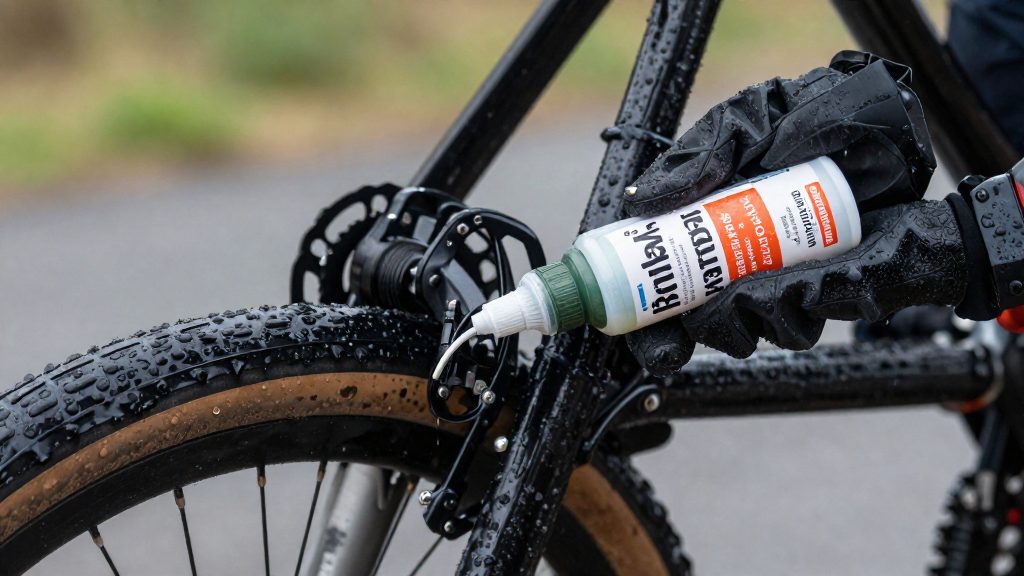
How do you clean the chain before lubing?
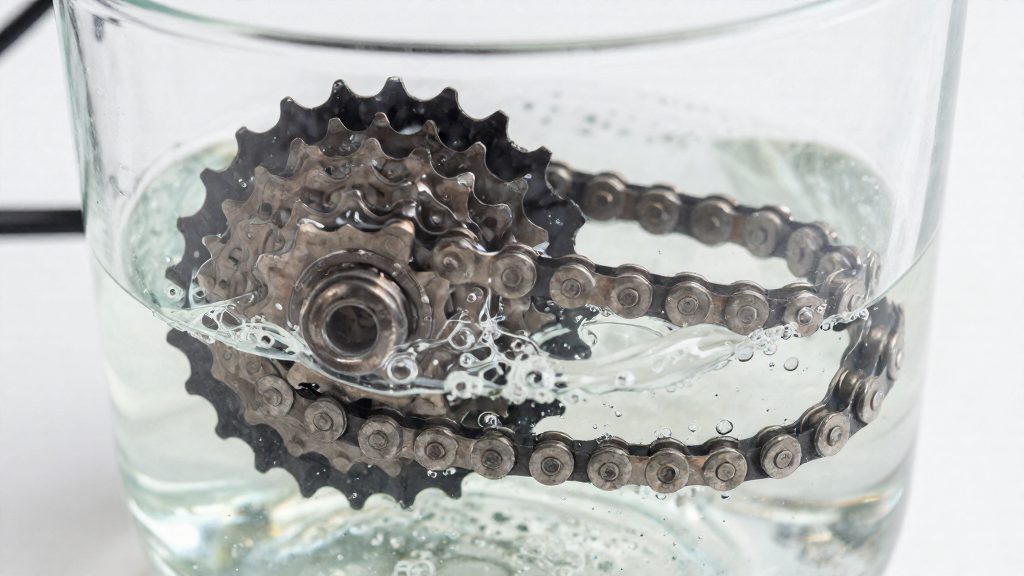
Muc-Off (2024) advises cleaning the chain before lubing whenever possible. Cleaning matters for both lube families: a wet lube applied over abrasive residue holds grit against the rollers and side plates, and a dry lube applied to a dirty chain locks the same particles into its coating. The sequence below works for either type.
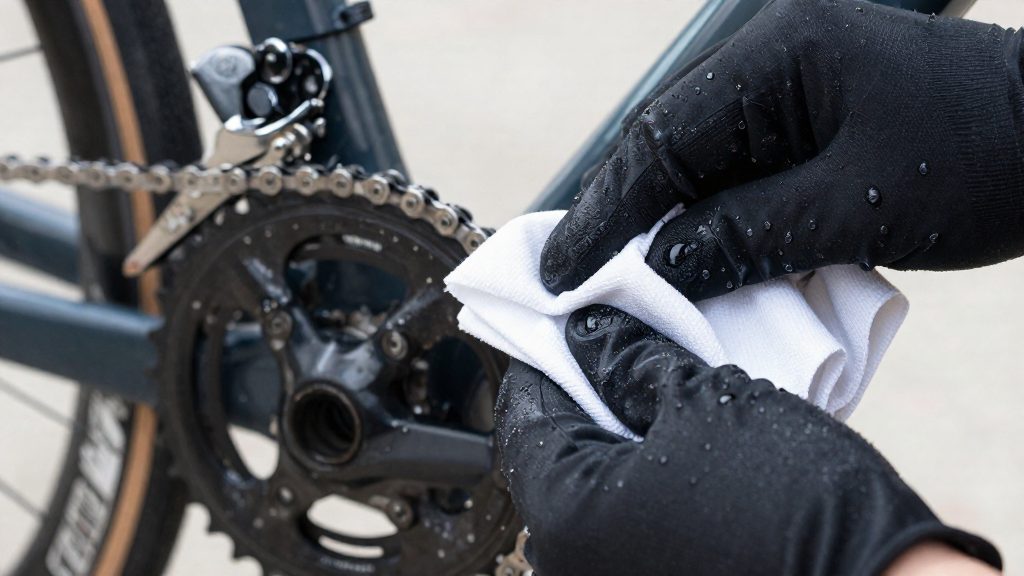
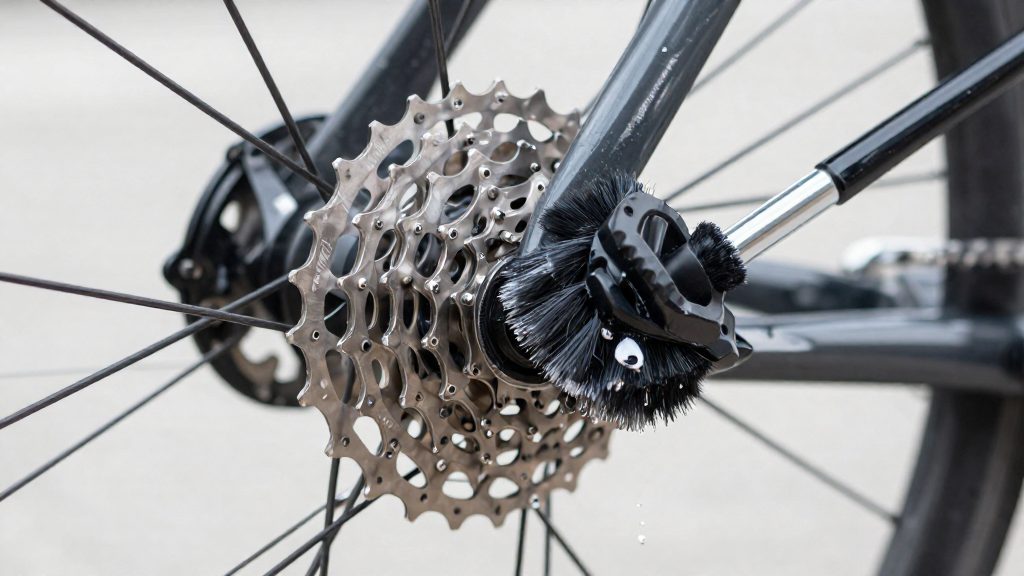
Degreasing comes first. Apply a degreaser while the chain is still on the bike, keeping it off the brake rotors and pads, then work it along the run with a brush so the bristles reach the inner and outer plates, the rollers and the gaps between links. Rinse off the degreaser as the product instructions direct. Wipe away the loosened dirt and degreaser with a cloth. Give extra attention to the sections running through the cassette and chainring, where grit builds up fastest.
Brushing is a separate step. Wiping alone leaves compacted grime between the side plates, so use a stiff brush and move it in the direction of travel. Turn the crank slowly so every link passes through the brush.
Drying is the step most often skipped. Water or degreaser left in the chain can mix with the lube and weaken the film it forms. Wipe the chain with a clean, dry cloth, then leave it to dry fully before applying any lube.
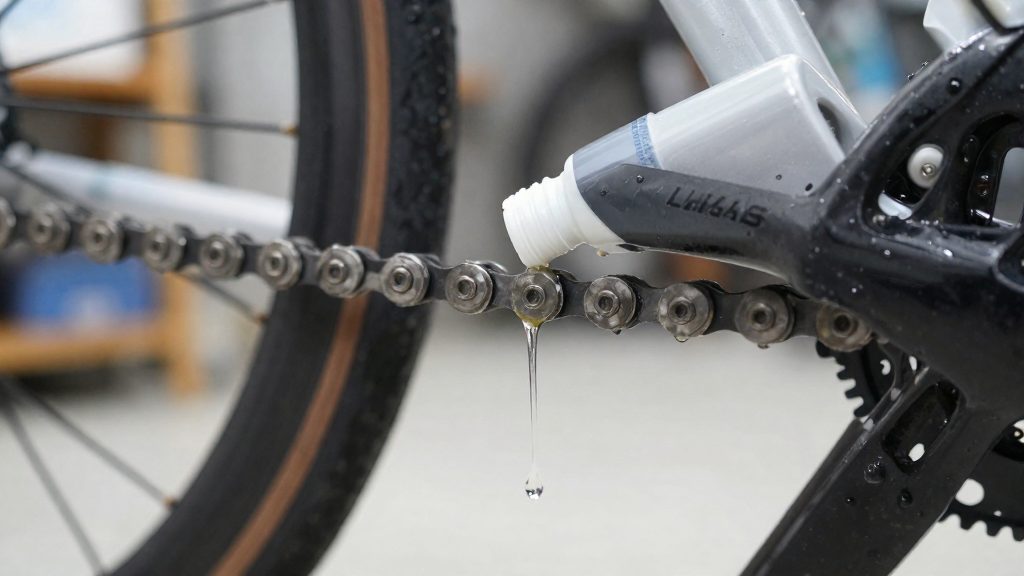
Once the chain is dry, apply lube sparingly to each roller while backpedalling, then wipe the excess from the outside of the plates. Surplus lube on the outer surfaces collects dust and grit, so removing it at this stage keeps the chain cleaner between rides.
What changes for winter riding with salt and slush?
Winter riding combines three stresses that rain alone does not create: water mixed with road salt, slush that packs into the drivetrain, and cold that changes how lubricant behaves. The lube has to stay on the chain despite spray and grit, and it has to remain workable when temperatures drop.
Road salt and slush
Salt and slush can speed up corrosion on a chain’s steel parts. Rust starts where the lubricant film has been thinned or removed, so the film needs to survive spray and grit.
Viscosity and chain stiffness
Lubricant thickness matters more in cold weather. Cold can change how a lubricant behaves, so check the product label for its rated temperature range. Some wax lubes are the weaker choice here: road.cc (2023) reports that some wax lubes are weak in cold or wet weather, and Morgan Blue Dry Wax is not recommended below 0°C. Judge a lube by the conditions stated on its label, not by how it feels on the shelf.
Choosing lube for salty, freezing roads
- Choose wet lube for days with salt and slush (Muc-Off, 2024).
- On long rides, carry a small bottle to top up the chain, as Muc-Off (2024) suggests.
- Check the product label for its rated operating conditions and follow the manufacturer’s instructions for application.
Common wet-weather lubing mistakes
Most wet-weather chain problems come from timing and quantity rather than from the choice of lube. Protection lasts only while the wet lube film stays on the chain. Three errors recur, and each one shortens that protection.
Waiting for visible rust
Rust on the rollers or link plates means the film has already failed, so the reapplication interval should follow the weather, not the appearance of the chain. Durability therefore varies sharply between products and conditions, and a fixed assumption about how long a lube lasts can leave a chain unprotected.
Leaving excess lube on the chain surface
Apply the lube to the rollers and inner link pins, allow it a moment to penetrate, and wipe the outside of the chain with a clean cloth. Only the working surfaces should keep a coating.
Riding long distances without a top-up bottle
Muc-Off suggests carrying a small bottle on long rides to top up the chain (Muc-Off, 2024). Since a single application wears down faster in wet weather, a long ride can outlast the film, leaving the chain exposed for the second half. Adding a few drops to the rollers at a stop, then wiping off the surplus, restores protection before the chain runs dry or begins to squeak.
Frequently asked questions
Can I use dry lube on a chain I ride in the rain every day?
Dry lube is more easily stripped by water, so a chain that sees daily wet riding is better served by a wet lube. Expect to reapply a dry film more often on such a chain.
Do I need to remove the old lube before switching between wet and dry types?
The two types use different bases, oil on one side and wax or Teflon on the other, so check the new product’s label for compatibility with the lube already on the chain. Cleaning the chain first is the step that makes any switch cleaner.
What does a top-up add that a full clean does not?
A top-up restores a protective film during a ride, so the chain stays protected until you stop. It does not replace a proper clean and lube, which should follow once you are home.